
Abstract · 2018
War Chest
Coins are units and actions, one action per turn and six markers: control more bases than your rival before they place all of theirs.
- 2–4 players
- 30–60 min
- 2.4 / 5 · Light
Set up the game
0 of 7 steps
Tick each step as you complete it.
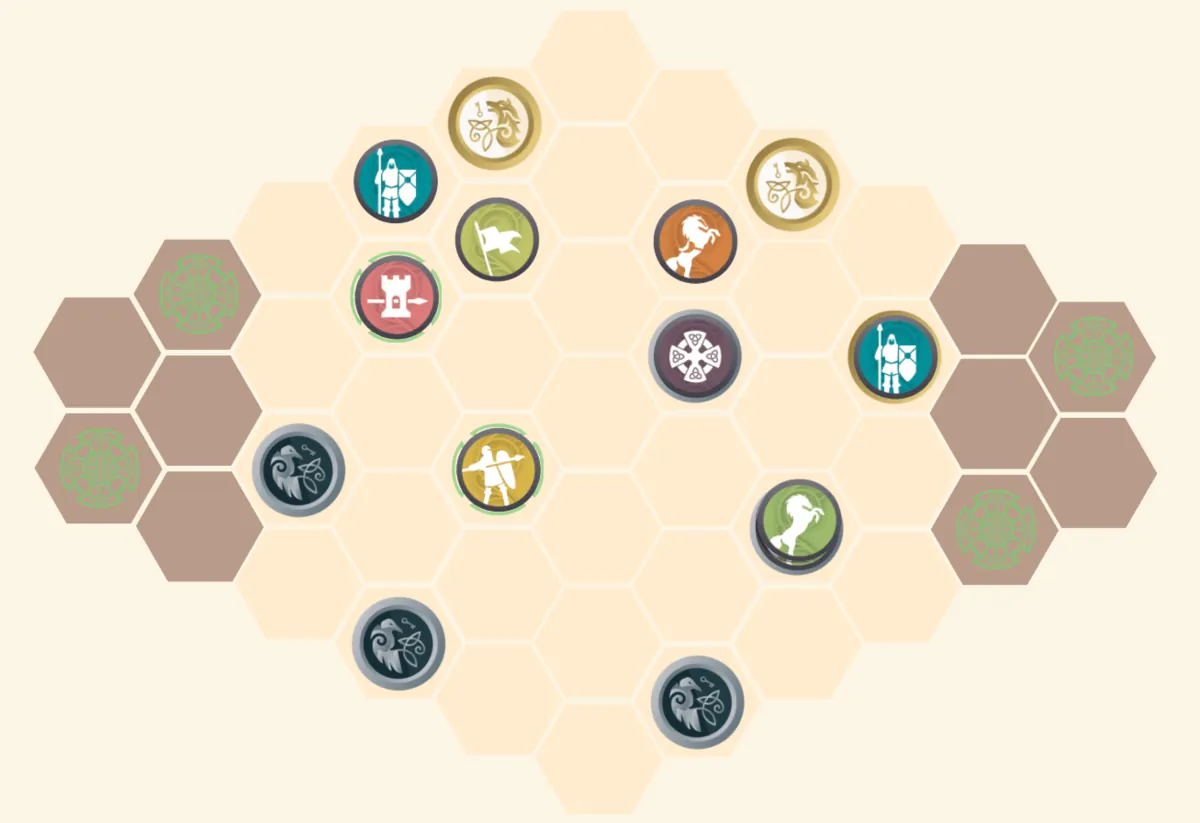
Central area for two 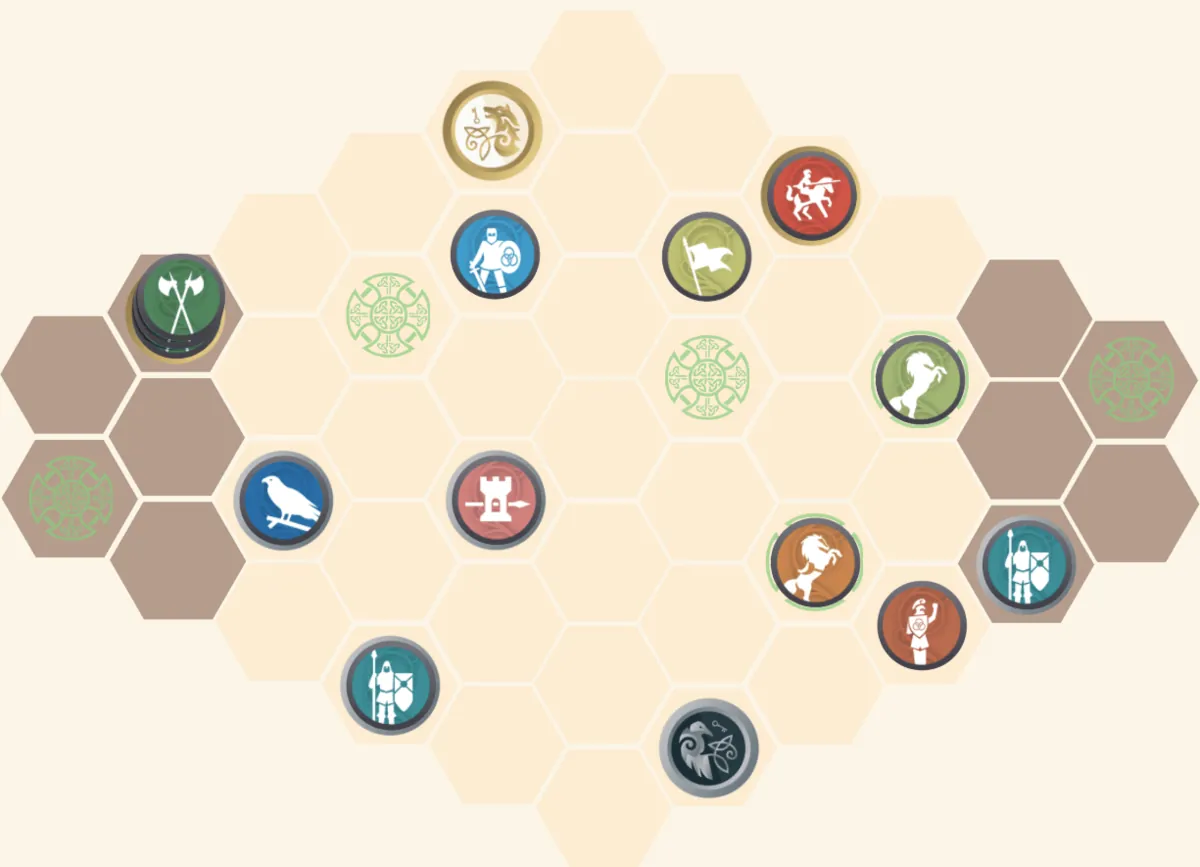
Full four-player board 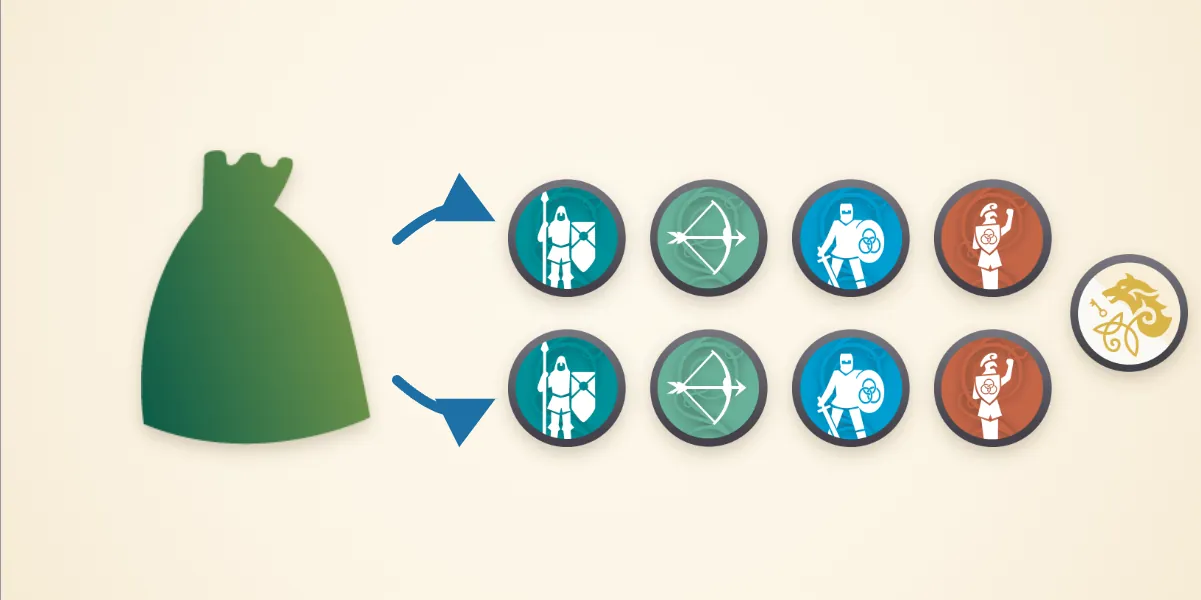
Nine coins in the bag The bag and its nine coins Starting bases for two 
Cards and supply 
Initiative marker The bases you need to control
What it is about
War Chest plays like an abstract: there are no dice and combat has no luck. What you have is a bag of coins and a hex board. Every coin does two jobs at once, because the unit it represents can be on the board and the action it allows can be in your hand. That double life is the whole game.
The round is always the same: draw three coins, take one action per turn and alternate until both hands are empty. When the bag runs out it is recycled from the discards. That is why the composition of the bag matters as much as your position on the board: the coins you add and the ones you leave out decide what you can do in the rounds ahead.
The bases are the clock. With two players each side has six control markers; with four, each team shares eight. There is no scoring and no tie-break: as soon as someone places the last one, the game is over. Everything else — moving, attacking, recruiting, claiming initiative — exists to make that moment arrive before it does for your rival.
Source note
This guide follows the standard two-player game and the action order used by War Chest Online. The team variant has its own expansion toggle in this same guide; the unit draft is explained in the FAQ.
EN rulebook (AEG, 2018) + War Chest Online · Reviewed: 25 Oct 2026